ProEducationalToys


Toys can be a great way to interact with your child and to teach new skills. Make learning fun! Visit our Retail Site By Clicking Here
Showing posts with label Child Development. Show all posts

Friday, December 15, 2017

Creativity in Children by Trisha Roberts


Who doesn’t want to be creative?  Or at least thought of as creative?  How does creativity develop?  How can we inspire a creative spirit in our children?
First, let’s look at what creativity is NOT.

Creativity is not a license for doing anything you want!  To let a child destroy a toy by playing with it in a “creative” way is not building creativity, it is teaching disrespect for property.

For example, if a child has a musical instrument, they can create and play wonderful melodies and harmonies, experimenting with octaves and chords and interludes.  They should not be bound by only playing music composed by others. But to let that child use their trombone for a golf club or their flute as a baseball bat would be destructive, not creative.

A Trombone "Baseball Bat"--A Thousand Times NO!


Or would anyone consider letting their child use their 8-week old puppy like a chair?  Of course not! Is it pretend play?  Yes, but it would be hurtful, possibly maiming to the puppy.


I have seen children destroy toys and parents excuse their behavior with, “Well, it’s their toy, they can do with it what they want.” Or “I don’t want to stifle their creativity.  Let them play the way they want to play.”  

This is not a way to develop maturity and respect for property.  It is not being creative.  It is giving license to do whatever a child wants without repercussions and is actually “sanctioning” such behavior by labeling it ‘creative’.  Think of the thousands of dollars spent on cleaning up graffiti!  Creative art is a wonderful thing, but marking or painting property without the property owner's permission is considered defacement and vandalism, which is a punishable crime.


Creativity is defined by Webster as, “the ability to make new things or think of new ideas.


Practical ways to help children play and think more creatively include:


  • Using the starter phrase, “What if…….” And letting children think of new and different ways to end a story, imagine a different world, use an item uniquely.
Examples:
What if dogs could fly?
What if you were president for a day?
What if you had a magic wand?
What if the Three Bears adopted Goldilocks?
  • Role Play
  • Have children close their eyes when you read to a new book and imagine the story for themselves rather than look at the pictures.  Let them describe what they “see”.
  • Place a variety of household items in a box.  Let children pick an item and then think of a new way to use that object.
  • Use a storyboard, action figures, stuffed animals, etc. to create a story.


A quote I found on the internet states, “If there's one thing that distinguishes highly creative people from others, it's the ability to see possibilities where others don't — or, in other words, vision. Many great artists and writers have said that creativity is simply the ability to connect the dots that others might never think to connect.                 Mar 4, 2014


Creative people are adaptive, think “outside the box”, and are resourceful, persistent (think of Thomas Edison and his multiple trials before getting the light bulb to work!).  They generate lots of ideas (brainstorm), blend ideas, explore unorthodox solutions.


Let’s raise a generation of children who are mature and respectful but at the same time able to look at problems and generate solutions in a fresh, innovative way.



Blog Administrator:  Trisha Roberts
proeducationaltoys@gmail.com


Copyright © 2017 TNT Inspired Enterprise, LLC, All rights reserved.


Unauthorized duplication is a violation of applicable laws.

Friday, November 24, 2017

5 Family Fun Fitness Activities by Brent Frayser


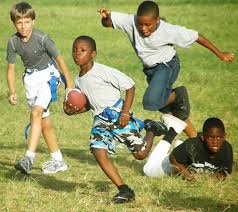
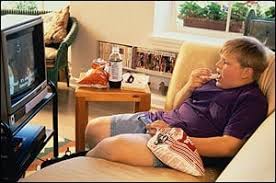
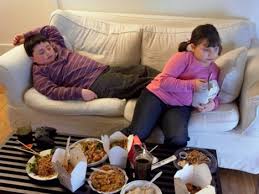
Forty years ago, it was a nightly battle for parents to get their children inside for dinner or for the night. Today, it is hard to get them outside and active. The advent and hypnotic pull of technology has drastically changed the way we live our daily lives. In the last twenty years we've seen an alarming rate of obesity and other health problems in children and young adults due to sedentary lifestyles.


The foods we used to eat were prepared at home and we ate our meals as a family around the table, which meant we spent time digesting and conversing. We played on the playground, at school gyms, around our neighborhoods. We were active from morning until bedtime.

The opportunities for physical activity today as it existed yesterday are still there but the opportunity has to be acted upon. Laptops and smartphones are the leading cause of inactivity, surpassing television as the leading cause, not only for children, but most adults. The fast food industry has taken hold of our culture and it has become rare to see families sit together at meal times with home-cooked meals.

As parents, we set the foundation for many aspects of life for our children, from values and work ethic to outlook and lifetime fitness habits. Staying active for yourself and your family and making
fitness a family affair, will not only lead to healthy adults but happy ones who are able to bounce back quicker from injuries and illnesses, and live longer lives.

The results of a research study on children and obesity published in children's health journal Acta Paediatrica, have revealed startling results regarding children and their sedentary lifestyles. The findings report that children's arm strength dropped by 26% and their grip strength by 7% since 1998. The research also found that in 1998, 1 in 20 children were able to hold their own weight when hanging from a bar but only 1 in 10 children can do the same today.


How To Get Started


If you and your family haven't been active, there might be some resistance at first, but experts say both the body and the mind can be re-programmed in only a few short weeks, so sticking with the plan to get healthier and more active until it becomes habit, is the key. Start slow.

You can start with 10 or 20-minute walks. Or start with an activity that you like to do such as basketball or volleyball. The time spent on these activities will gradually increase. Staying healthy as a family requires the whole team's involvement. Here are five family activities that you can begin with to get your family to an optimal state of health:


Walking

Walking is one of the easiest and low-impact exercises there is to stay fit and healthy. The good thing is that we already do it so well. Gather the family and take long walks in the park, at a local campground or just around your neighborhood. This is an excellent bonding activity as it allows for conversation and is good both before dinner and after. At a later time, you can incorporate small hiking trips as your energy levels increase through exercise. 


TV Fitness Breaks
If you can't cut out television altogether, when you are watching television make every commercial break a fitness break. For every commercial, the family jumps up and does an exercise of someone's choice. Everyone gets a turn choosing an exercise. Make it fun. When commercials are over, the exercise is over. You'll feel the benefits immediately.


Roller Skating or Rollerblading

Roller skating is an excellent outdoor activity that the whole family can participate in. Not only does it improve mood, but it is easy on the joints and you can create skills games and baton races to add to the fun when skating as a family. Roller skating is excellent for gliding along in conversation as well and is a wonderful way to get the family together on the weekends.


Obstacle Course

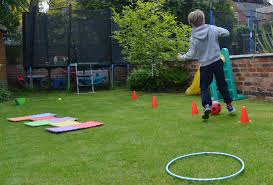
You can easily create an obstacle course in your backyard. When mom and dad participate in activities with their children, the children are more involved and willing to get active. Obstacle course help move every part of your body and help children develop motor, emotional and social skills. Your obstacle course can have a multitude of different activities built in such as: throwing, kicking, jumping, sliding, balance, and hopping.


Bicycling

One of the lowest impact, cardiovascular exercises is bike riding. Not only is it healthy for the whole body, but it boosts brain health as well, which means it’s a perfect health routine for the whole family. A recent study revealed that brain scans show an increase in the brain's white matter when a person exercises using an "overlearned skill" like bicycling.


It is up to adults to teach children the healthy habits of activity and exercise. We must break the cycle of sedentary lifestyles and the resulting obesity and disease which is shortening our lives. Creating the foundation for healthy habits for the whole family is easy and rewarding.


Make an activity jar. Let the whole family come up with healthy activities that the whole family can do together. Write them on strips of paper and place the strips in the jar. Draw from the jar every day or make it a weekend jar. The main goal is to get the whole family active and healthy. Every activity you do, whether indoors or outdoors, helps to create a love for health and wellness which leads to a long life.


Brent Frayser is a media relations representative for Pure Barre, who is a graduate of the University of Mississippi with a Bachelor’s Degree of Business Administration (Major in Marketing, Minor in Management).  He was born and raised in the south, is very outgoing, with a strong sense of determination.  In his spare time, he enjoys: reading, writing, coaching baseball and football, and spending time with family and friends.  


Blog Administrator:  Trisha Roberts
proeducationaltoys@gmail.com


Copyright © 2017 TNT Inspired Enterprise, LLC, All rights reserved.


Unauthorized duplication is a violation of applicable laws.

Friday, October 20, 2017

Balloon Fun for Young Children By Trisha Roberts


What child doesn’t love a balloon?! Besides being a herald of great tidings such as a birthday or other celebration, balloons can be played with in a variety of ways that are also therapeutic.

Helium Balloons                          

Helium Balloons are great, especially the mylar type, as they stay inflated longer and have less risk of popping. When children are learning to stand and walk, a helium balloon can be a tool to build balance. I cut the ribbon on the helium balloon and knot the end so that the ribbon dangles at about the height of the child’s head. This motivates the child to reach up and pull on the ribbon to bring the balloon down.  Core strength, balance, eye-hand coordination, isolation of arms from trunk are all skills that can be improved with this activity.  It is also FUN, so the child is motivated to repeat it many times.


You can also hold a helium balloon at chest level in front of your child and have them reach out and “bop” the balloon out of your hand and watch it rise to the ceiling.

Latex or Plastic Balloons

Regular Latex balloons are great for teaching catching skills to a young child.  A regular playground ball is too hard and difficult to catch for most children just starting to work on ball skills (see our recent 3-part article about Development of Ball Skills in Young Children by clicking here), but a balloon is soft, floats down slowly, and is pliant, making catching easier.


I love to use half or a third of a pool noodle to practice eye-hand coordination and motor planning skills. (If you can’t find a pool noodle, a gift wrap tube or rolled newspaper can serve the same purpose).   Throw the balloon into the middle of the room and have your child try to hit it then chase it around as it skitters away.  You can also use the pool noodle as a bat and play a modified game of T-ball by hitting the balloon off of a stool, chair or other raised surface. Or you can try suspending the balloon from a pool noodle and holding it out for your young one to hit.


 Your child might like batting the balloon around an obstacle course composed of furniture and objects in the room. One or more children can work to keep the balloon in the air by continually hitting it as it starts to float down.


Cautions:  

NEVER, EVER, EVER (Did I mention NEVER!) let a child suck on a balloon or put it in their mouth.  Latex and plastic-type balloons can pop and go down the throat, choking and even asphyxiating a child!

Be cautious of the long strings and ribbons on balloons—children and pets can get them wrapped around their necks or other body parts, potentially causing injury.

Many balloons are still made of latex—be careful not to use them around children and others who have latex allergies!


Blog Administrator:  Trisha Roberts
proeducationaltoys@gmail.com


Copyright © 2017 TNT Inspired Enterprise, LLC, All rights reserved.


Unauthorized duplication is a violation of applicable laws.
Friday, October 13, 2017

Toys that Help Children Develop Creativity By Trisha Roberts


Not all toys are created equal.  As a Physical Therapist, mother and now grandmother, I am always looking for toys that stimulate and foster creativity. I love toys that make kids think…that let kids explore…that encourage an adventure…that involve more than, “push this button and get the standard response”! Children absorb so much from their environment—make it rich in learning opportunities. 

 Make learning fun!


Construction toys like blocks, Legos, Lincoln Logs, and Erector Sets allow children’s imaginations to run wild as well as develop good Fine Motor, Cognitive and Perceptual Motor Skills.
Power Clix Set


Crayons, Play Doh, Markers, Finger Paint, Colored Pencils, Stencils, and other art mediums encourage children to express themselves artistically while exploring colors, shapes and textures.


Doodle Roll


Musical Instruments, whether home-made or bought, permit and inspire children to explore the world of sound, melody, harmony and dissonance.


Microscopes, telescopes, and chemistry sets arouse curiosity and motivate children to discover, unearth, and investigate.  They open up whole new worlds to be explored and researched.


Binoculars


Card games, board games, and word puzzles develop thinking, strategy, and inter-personal skills that help develop an effective approach to tackling and solving problems.


Guess Who?


There are multitudes of companies and stores vying for your dollar.  Think about what to buy your child that will have lasting value in the aptitudes, competencies and abilities that toy may help to cultivate. Amplify your child’s knowledge by providing tools that will expand their thinking and promote an atmosphere of adventure and discovery in your home.  Encourage a questing spirit. Laud and applaud their creations. Encourage a lifetime journey of growth and learning!


Blog Administrator:  Trisha Roberts
proeducationaltoys@gmail.com


Copyright © 2017 TNT Inspired Enterprise, LLC, All rights reserved.


Unauthorized duplication is a violation of applicable laws.
Friday, October 6, 2017

The Low Down on W-Sitting By Trisha Roberts


      W


W-sitting refers to a sitting posture where the buttocks are between the feet and the lower legs are bent at the knees and positioned behind the body to either side, thus forming a W shape.


When a person W-sits the medial (inside) sides of the knees are stressed.  This can lead to overstretching of the ligaments and potentially to an unstable knee and orthopedic problems.


Why do children W-sit?  Why is this bad?

Almost all children will W-sit occasionally, but persistent, prolonged W-sitting is to be discouraged because of the potential harm to the knee and hip joints.

 Children with low muscle tone frequently develop this type of sitting as their preferred method of rest.  It gives them a very large base of support, making them more stable and requiring less energy to maintain; it helps them compensate for their weak musculature. They can play and manipulate toys with their arms, using less energy to keep their trunk and pelvis controlled.   But again, reliance on this position can stress the ligaments and muscles in the hips and knees, and these children already tend to have very lax, flexible joints because of their low muscle tone.

Children with high muscle tone (hypertonia) and sometimes children with spastic Cerebral Palsy (Spastic CP) sit this way.  It should be discouraged because it feeds into their abnormal patterns of movement. W-sitting can aggravate muscle tightness, as it places hip internal rotator muscles, hip adductor muscles and heel cords in a shortened position. W-sitting can lead to more muscle tightness and possibly contractures.

When a child depends on W-sitting it can inhibit or delay them from developing the movement patterns, balance and coordination needed for higher level skills like walking, kicking, running, and skipping. They may also develop poor standing posture and gait abnormalities.


W-sitting can cause hip dislocation, especially if a child has hip dysplasia (a condition of instability, or looseness between the head of the femur and the acetabulum of the pelvis).


Children frequently move backward into a W-sitting position when they are crawling, as it is easier for them to move in and out of sitting and quadruped (all fours), requiring less energy and effort than rotating to one side or turning to sit with legs out front (long sitting).


Very little trunk rotation occurs when a child W-sits.  They are less likely to cross midline and tend instead to manipulate objects on their left side with their left hand and toys on their right side with their right hand.  This can cause delays in developing a hand preference and could lead to future coordination problems.  Additionally, because of the limited amount of trunk rotation allowed in W-sitting, children don’t practice and learn to weight shift diagonally and develop the ability to transition smoothly in and out of positions like sitting and quadruped (all fours) with good rotation.


Other sitting positions to encourage:

Long sitting:   sitting with legs straight out front


Side sitting:  both legs are to one side of the buttocks


Heel sitting:   buttocks rest on the heels (can also be referred to as low kneeling)

Sitting on heels or feet rather than between legs


Crossed Legs:  legs are crossed over each other in front (also referred to as Taylor sitting, Indian style, or “criss-cross applesauce”)


Taylor or Indian Sitting


Cue Your Child:

Children who W-sit find this position very comfortable and stable.  You will need to work with your child to change this pattern.  When you see them W-sitting, give them a positive command like, “Pretty Legs” or “Fix Your Legs”.  (You might want to try something even more meaningful to your individual child, like, “Princess Legs” or “Rocket Ship Legs”) If your child goes to a day care or school, you will want to communicate with the teachers or care providers so that everyone working with your child will be discouraging W-sitting and using the same cues.


Be Consistent!  W-sitting is a habit that needs to be eliminated for the good health of your child. 


Blog Administrator:  Trisha Roberts
proeducationaltoys@gmail.com


Copyright © 2017 TNT Inspired Enterprise, LLC, All rights reserved.


Unauthorized duplication is a violation of applicable laws.