ProEducationalToys


Toys can be a great way to interact with your child and to teach new skills. Make learning fun! Visit our Retail Site By Clicking Here
Showing posts with label Educational Resources. Show all posts

Saturday, August 25, 2018

How To Help Your Cat Adjust To a Newborn Baby by Chloe J. Larson


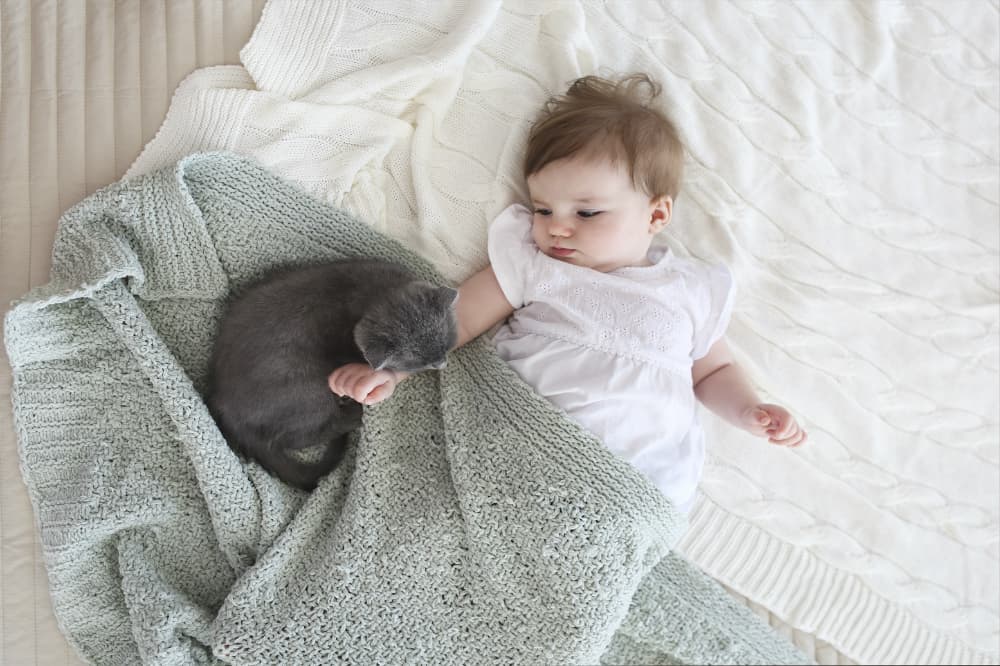
Introducing your cat to a new baby can be an exciting time. However, you'll want to make sure that things go smoothly for both the baby and your cat. Luckily, there are plenty of tips to help you with allowing your pet and baby to get along in the best ways possible. Just try them out and you'll surely find that your cat is happy to welcome home a new little human friend.

Get Your Pet Ready for a Baby


Making an abrupt change can be stressful on your cat, so it's important to start getting them used to the change early. The good news is that pregnancy provides plenty of time to begin this process. You can do things like play baby sounds for the cat to hear, and let them check out some of the clothing and other things you purchase for your new baby.
In addition, you can talk with your veterinarian to get some tips that might be more specific to your cat as an individual. They'll have a clearer idea about how your cat might react, and what steps you can take to keep both your pet and your baby safe.

Take a Minute to Reconnect
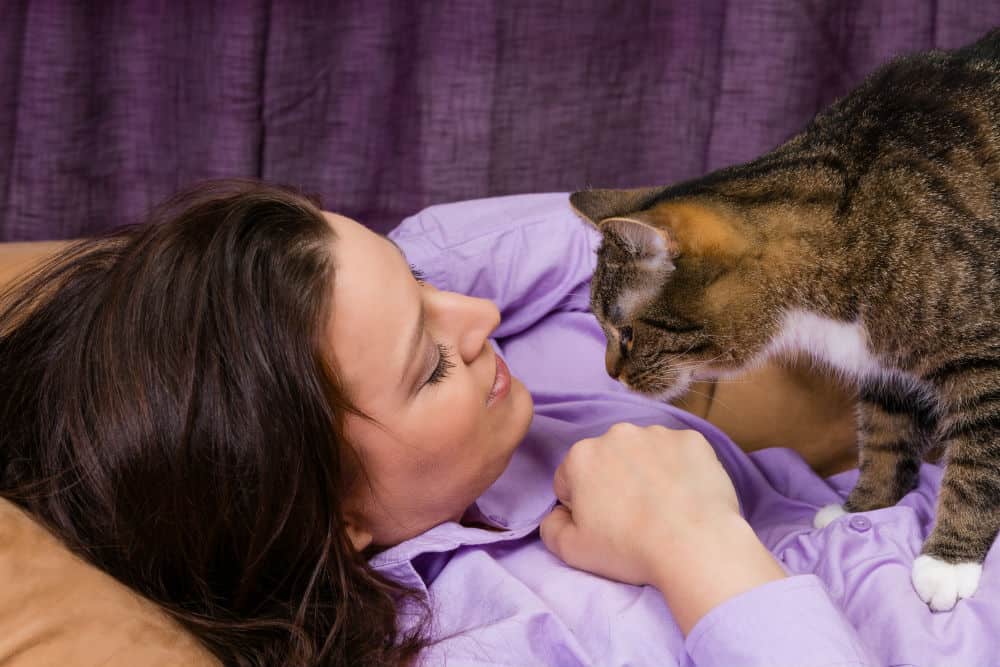

Things can be rushed and dramatic when you head off to the hospital to bring your baby into the world, and your pet might be left wondering where you went. If you are away from your home for a few days, then your pet is likely to be excited to see you!
This is a good time for you to take a minute to reconnect with your cat and remind them that you love them. If you can, have someone else take the baby into another room so that you and your pet can have a moment. Your pet will greatly appreciate the time you take to greet them rather than ignoring them in favor of all the baby excitement.

Let Your Cat Get Used to Baby Scents
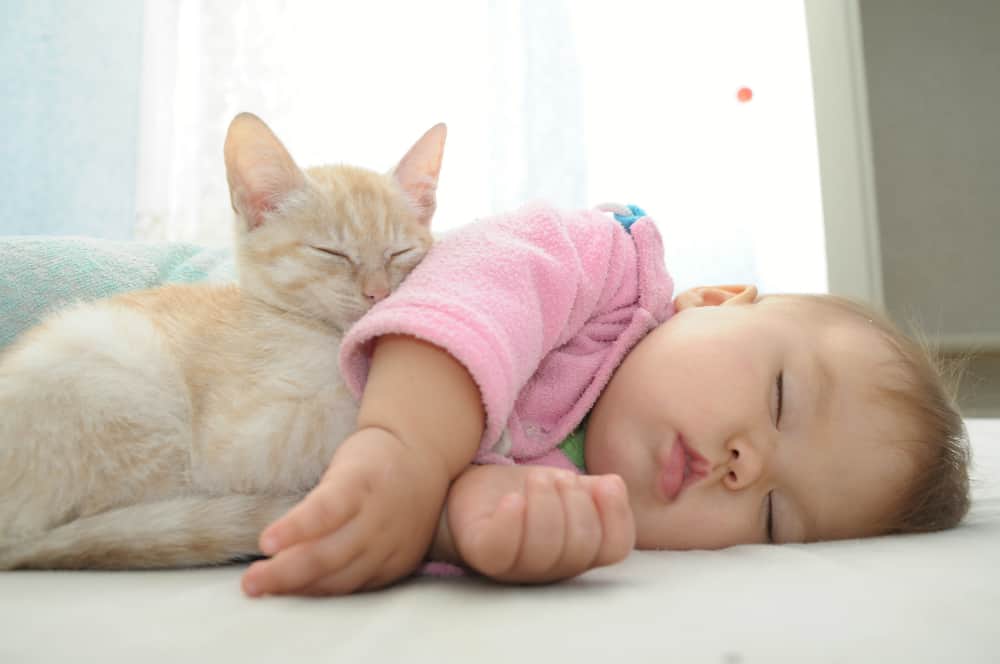


Before you introduce your cat to the new baby, it can be helpful to let them explore the scent of your new human. A great way to do this is by taking one of the blankets or clothing items your baby has been using and place it somewhere the cat can check it out.
This helps your cat to acclimate to the new human without too much stress and you may even find that they enjoy laying on it! That can be a good sign that your cat is going to be happy to meet the baby and will eventually want to snuggle with them when they're big enough.

Neuter/Spay Your Cat


Getting your pet spayed or neutered is not only good for them with regard to how they might react to a baby, but is also often better for their overall health. Fixed pets are often more mellow and have overall better health in the long run. They can also experience fewer behavioral problems.
A calmer cat is one that you'll be able to feel more comfortable about having around your baby. As the baby ages, they'll also be less likely to be bitten or scratched. Your baby will be far happier, and your cat will enjoy being around the baby more.

Keep Up With Training
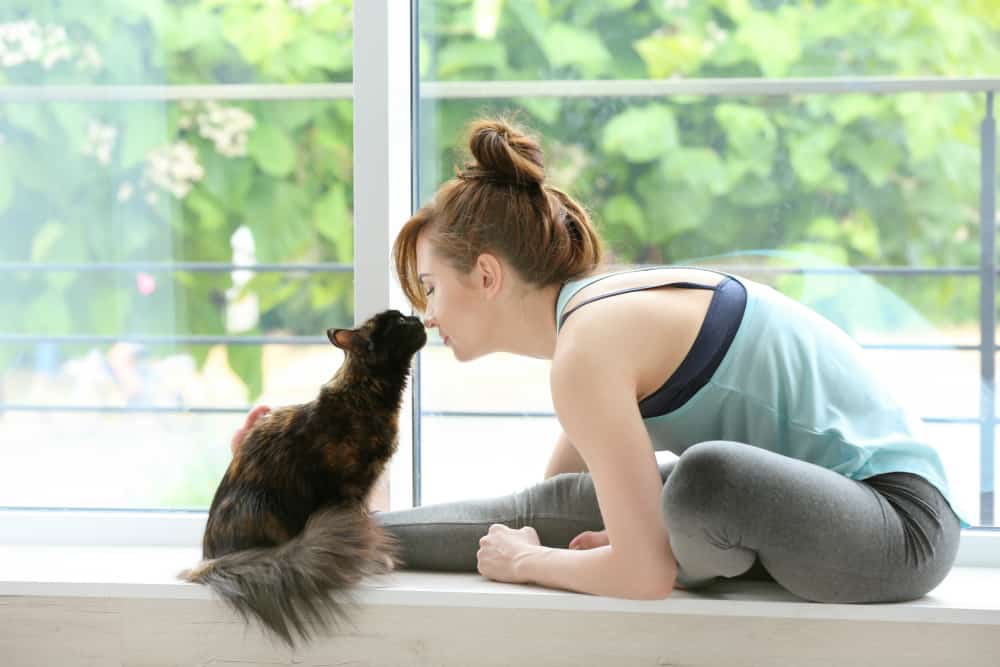

While training isn't often as big of a thing with cats as it is with dogs, there are some smaller training tips you can use to allow for more harmony in your household. An example would be teaching your cat to be a little less demanding, only hopping into your lap when you entice them to.
Some may also want the cat to steer clear of the baby's room in general so that the cat and baby only interact when you can keep a close eye on them both. For this, you can make sure of a baby gate or just keep the door closed as much as possible.

Trim those nails

An easy aspect to keep control of is making sure that your cat's claws stay trimmed. That way, even if they do get frustrated with the baby they won't be able to do much harm while swatting at them. If your cat isn't used to getting their claws trimmed, that may be something you want to work on prior to the baby's arrival.
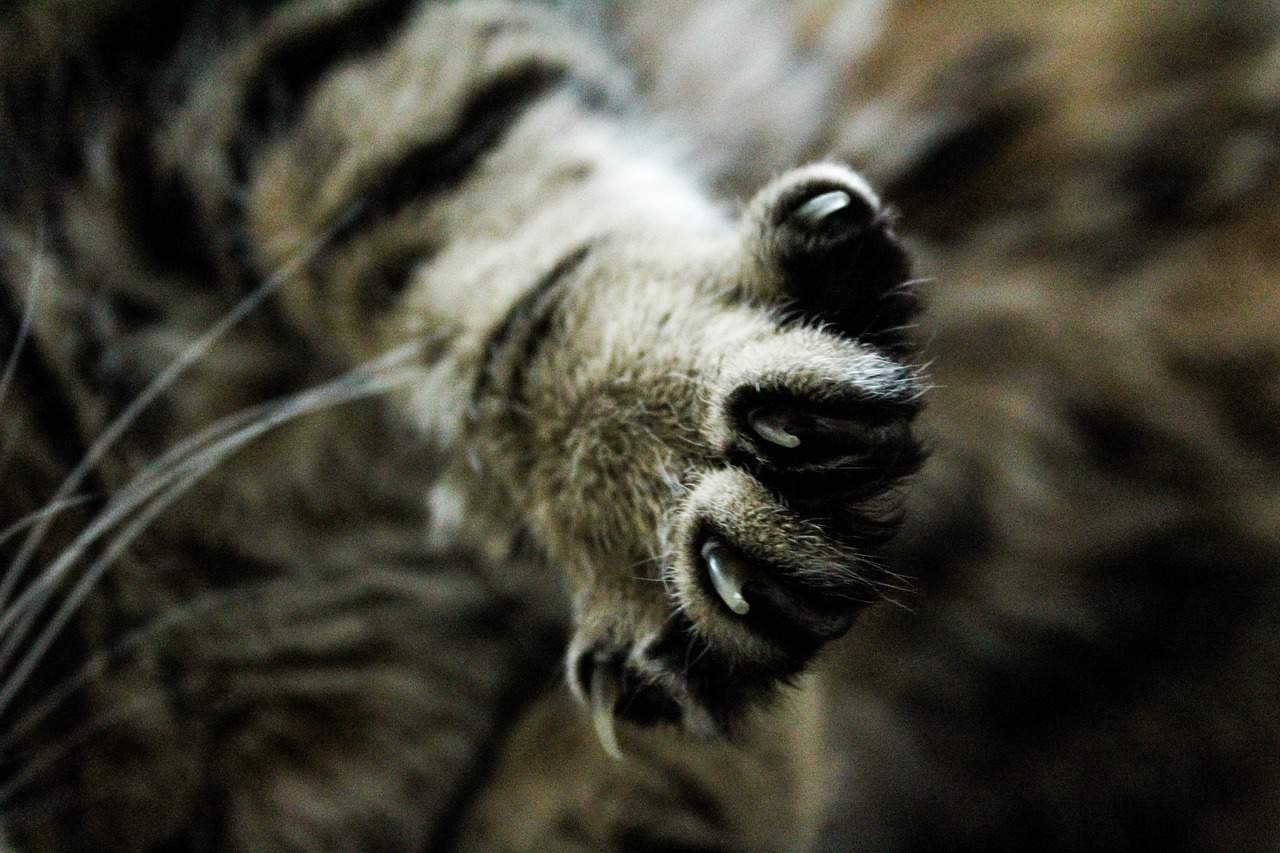


If you need help, you can recruit another adult to either hold the cat or trim the claws. A veterinarian can also help to show you what you need to do if you ask them during a routine checkup. In time, they should get used to the process and you'll be able to handle it yourself.

Making the Introduction

When you decide to introduce your baby and cat, make sure it's in a quiet, relaxing space. It can be helpful to have the baby in a car seat or other area where you can easily pick them up if the cat isn't a fan. It can also help to talk to your cat in a soothing way, letting them know it's okay to explore.
In many cases, the cat is likely to be only mildly interested in the baby or not interested at all. That's okay! As your baby gets older and starts moving around, they'll have more of a chance to get familiar with your pet. For now, it's mostly a matter of making sure the cat is okay with this new family addition.

Conclusion

Overall, introducing your new baby to your cat doesn't need to be complicated. Just take the steps to allow your cat to make the adjustment more slowly and there's likely to be no serious problems. It can also help to get the advice of professionals to make sure your home is a comfortable place for your cat and your baby.
In time, it's likely that both of these family members will grow to love each other. It's just a matter of making sure your cat has time to adapt.

Meet My Guest Blogger, Chloe J. Larson!


Chloe is a lover of all things cute and furry, with three cats and two dogs taking up most of her free time. When she does have time to blog, she likes to write about anything and everything to do with pets and pet care, and you will find some very interesting information about how to care for your fur babies on her blog, kittywise.com.


Blog Administrator:  Trisha Roberts
proeducationaltoys@gmail.com


Copyright © 2018 TNT Inspired Enterprise, LLC, All rights reserved.


Unauthorized duplication is a violation of applicable laws.


Friday, March 23, 2018

101 Ways to Play Outdoors


I came across this great poster on the website:  http://childhood101.com by Christie Burnett, Editor.

Several years ago they featured a poster of 101 Ways to Play Outdoors, which I would like to share with you here.


  • Play leapfrog
  • Jump rope
  • Climb a tree
  • Build a fort
  • Play hide and see
  • Kick a ball
                           
HOSE RAINBOWS
  • Make a rainbow with the hose
  • Pull weeds
  • Ride a bike, scooter, or horse
  • Create a nature collage
  • Build a sand castle
  • Head out on a treasure hunt
  • Roll down a hill
  • Make a bug hotel
             
HOTEL FOR BUGS
BUG HOTEL
  • Balance along a wall
  • Throw a frisbee
  • Balance a bean bag on your head
  • Have an egg and spoon race
  • Hug a tree
  • Create patterns in damp sand
  • Make story stones
  • Paint a fence with water
  • Make texture rubbings with crayons
               
CRAYON RUBBINGS
  • Swing your hips in a hula hoop
  • Make a rain gauge
  • Play tag
  • Draw something you can see
  • Jump in a puddle
  • Play hopscotch 
  • Draw on the trampoline or the sidewalk with chalk
  • Read a book
  • Catch raindrops on your tongue
  • Make a set of stilts from tin cans
                  

TIN CAN STILTS
  • Have a game of marbles
  • Enjoy breakfast outside
  • Rake leaves
  • Set up a worm farm
  • Decorate mud pies
  • Run under the sprinkler
  • Paint the outside of a window
  • Make a daisy chain
  • Start a nature journal
  • Lie in a hammock
  • Toast marshmallows
  • Find 10 things to float in a tub of water
  • Write in the sand with a stick


PRESS FLOWERS
  • Press flowers
  • Make a pinwheel
  • Make a stick scupture
  • Make a pet rock
  • Try leaf printing
  • Draw around a shadow on the ground
  • Plant vegetables and herbs
  • Grow a bean or sunflower plant
  • Take photos of what you see
  • Have a 3-legged race
                        
3-LEGGED RACE
  • Have a wheelbarrow race
  • Gaze at the stars
  • Set up a lemonade stand
  • Paint with feathers
  • Decorate a tree
  • Create a home for a fair or an elf
  • Make a tin can telephone
  • Enjoy a teddy bar picnic
  • Make a drip castle with wet sand
  • Write a letter on a leaf

FLY A KITE

  • Fly a kite
  • Make up a new game
  • Put on a show
  • Grab a magnifying glass and go bug hunting
                             
EXPLORE USING A MAGNIFYING GLASS
  • Try a somersault, handstand or cartwheel
  • Watch a sunset
  • Spin and get dizzy
  • Start a collection
  • Float a paper boat
  • Make a cave for a dinosaur
  • Wash the dog
  • Wash the car
  • Create a small world for your favorite figurines
MAKE A SUNDIAL

  • Make a sundial
  • Host a paper plane flying contest
  • Blow bubbles
  • Dance and sing
  • Make your name from sticks
  • Make a road for toy cars
  • Play flashlight tag
  • Build a compost bin
  • Throw water balloons
  • Make object impressions in clay
  • Put on a cape and fly
  • Grow a grass head
  • Make a bird bath
  • Make a bird feeder
  • Make petal perfume
PETAL PERFUME

  • Dig for treasure
  • Make a leaf crown
  • Hang laundery
  • Draw a map of your space
  • Set up a snail race
  • Lie back on the grass and look for shapes in the clouds

SEE HOW MANY MORE YOU CAN ADD TO THE LIST AND LET ME KNOW!


Blog Administrator:  Trisha Roberts
proeducationaltoys@gmail.com


Copyright © 2018 TNT Inspired Enterprise, LLC, All rights reserved.


Unauthorized duplication is a violation of applicable laws.


Friday, March 9, 2018

Fun and Fascinating: Easy Experiments for Kids and Dads by Daniel Sherwin


Parents are up against a powerful foe on the weekends. Video games occupy kids for hours on end. Though entertaining and engrossing, most of them don’t do much for your child’s development, which makes weekends an intellectual black hole. Most kids roll their eyes at the idea of educational activities that cut into their gaming time, but an instructional activity doesn’t have to be boring and school-like. Some can be as effective at holding your child’s attention as the latest video game and may even spur an interest in science, a dream scenario for any parent. They’re especially handy for single fathers, since they can be done as a family and are a great way to spend some quality time together. 
Cool experiments
The water cycle bag experiment is an easy activity requiring nothing more than some plastic sandwich bags and food coloring. Simply place ¼ cup of water in a dish and add four drops of food coloring. Then pour the mixture into a plastic bag, seal it, and take it to a window. The sunlight gradually causes the water to evaporate, and it eventually changes back into condensed water, in imitation of nature’s water cycle. Ultimately, you’re left with a form of precipitation in a bag!
Young kids love activities that allow them to incorporate their name in decorative and striking ways. The crystal names experiment uses Borax, food coloring, pipe cleaners, and a little fishing line to produce colored crystals which adhere to pipe cleaners spelling out their name. Hold each “letter” up in the sunlight to see how they sparkle. Borax dissolved in water creates a suspension, with solid particles that are big enough for sedimentation to take place, and colored crystals are formed.
Few home experiments are as fun as making a glass of lava. Simply fill a glass ¾ full of water, add five drops of food coloring, and then pour in ¼ cup of vegetable oil, which will float to the top since it’s lighter than water. The fun really starts when you sprinkle salt on top to make globs of “lava” begin to move around. Homemade puffy paint is also a fun experiment for all ages. Mix Elmer’s glue and shaving cream in a container or on a paper plate, and then add a few drops of food coloring and mix slowly until you get the proper consistency. All that’s left is to get some paper and brushes and let your imagination take over.
Your kids may be familiar with the tried-and-true egg-drop challenge, since it’s a popular experiment among science instructors. The objective is to build a container that’s capable of keeping an egg from breaking when dropped from a high place. This one is fun because there’s no limit on the kinds of material you can use—as long as they’re soft! For this one, try toilet paper rolls, newspaper, popsicle sticks, a shoebox, plastic bag, rubber bands, string, and balloons. Attach toilet paper rolls at four corners of a sponge using tape. Place an egg in the middle of them and run tape around the outside of the rolls to secure the egg. Next, attach a plastic bag as an umbrella, attaching it to your “egg carrier” with string. Now, it’s time for your experiment. You can use a play set in the backyard, drop if from the top of a step ladder, or let it fall out the window. Just make sure the coast is clear before you let go!
If your kids are into geology, your own backyard can be your laboratory. Conduct your own “acid” test using white vinegar to determine whether you have limestone deposits. Pour vinegar into several bowls, find some rock samples, and place one in each bowl. If bubbles form in one, you know you’ve found a limestone rock!
Single dads are often challenged to find educational activities that their children can enjoy. Scientific experiments can be fun as well as instructional. The best part is, you can do many of them at home with commonplace household items.
Picture Courtesy of Pixabay.


About Our Guest Author:

Daniel Sherwin is the proud single father to two amazing kids (a daughter and a son). After noticing the lack of resources on the web for single dads, he started DadSolo.com so that others could learn from his successes, failures, and everything in between.


Blog Administrator:  Trisha Roberts
proeducationaltoys@gmail.com


Copyright © 2018 TNT Inspired Enterprise, LLC, All rights reserved.


Unauthorized duplication is a violation of applicable laws.


Friday, December 15, 2017

Creativity in Children by Trisha Roberts


Who doesn’t want to be creative?  Or at least thought of as creative?  How does creativity develop?  How can we inspire a creative spirit in our children?
First, let’s look at what creativity is NOT.

Creativity is not a license for doing anything you want!  To let a child destroy a toy by playing with it in a “creative” way is not building creativity, it is teaching disrespect for property.

For example, if a child has a musical instrument, they can create and play wonderful melodies and harmonies, experimenting with octaves and chords and interludes.  They should not be bound by only playing music composed by others. But to let that child use their trombone for a golf club or their flute as a baseball bat would be destructive, not creative.

A Trombone "Baseball Bat"--A Thousand Times NO!


Or would anyone consider letting their child use their 8-week old puppy like a chair?  Of course not! Is it pretend play?  Yes, but it would be hurtful, possibly maiming to the puppy.


I have seen children destroy toys and parents excuse their behavior with, “Well, it’s their toy, they can do with it what they want.” Or “I don’t want to stifle their creativity.  Let them play the way they want to play.”  

This is not a way to develop maturity and respect for property.  It is not being creative.  It is giving license to do whatever a child wants without repercussions and is actually “sanctioning” such behavior by labeling it ‘creative’.  Think of the thousands of dollars spent on cleaning up graffiti!  Creative art is a wonderful thing, but marking or painting property without the property owner's permission is considered defacement and vandalism, which is a punishable crime.


Creativity is defined by Webster as, “the ability to make new things or think of new ideas.


Practical ways to help children play and think more creatively include:


  • Using the starter phrase, “What if…….” And letting children think of new and different ways to end a story, imagine a different world, use an item uniquely.
Examples:
What if dogs could fly?
What if you were president for a day?
What if you had a magic wand?
What if the Three Bears adopted Goldilocks?
  • Role Play
  • Have children close their eyes when you read to a new book and imagine the story for themselves rather than look at the pictures.  Let them describe what they “see”.
  • Place a variety of household items in a box.  Let children pick an item and then think of a new way to use that object.
  • Use a storyboard, action figures, stuffed animals, etc. to create a story.


A quote I found on the internet states, “If there's one thing that distinguishes highly creative people from others, it's the ability to see possibilities where others don't — or, in other words, vision. Many great artists and writers have said that creativity is simply the ability to connect the dots that others might never think to connect.                 Mar 4, 2014


Creative people are adaptive, think “outside the box”, and are resourceful, persistent (think of Thomas Edison and his multiple trials before getting the light bulb to work!).  They generate lots of ideas (brainstorm), blend ideas, explore unorthodox solutions.


Let’s raise a generation of children who are mature and respectful but at the same time able to look at problems and generate solutions in a fresh, innovative way.


Blog Administrator:  Trisha Roberts
proeducationaltoys@gmail.com


Copyright © 2017 TNT Inspired Enterprise, LLC, All rights reserved.


Unauthorized duplication is a violation of applicable laws.

Friday, December 1, 2017

ImaginOak Play Mats


This week I feature a terrific product that encourages creativity and imagination--the ImaginOak Play Mats


ImaginOak Play Mats are designed to engage children in open-ended adventure and creative story play, using the toys they already have. The large vinyl mats provide three unique environments for kids to make believe their own exciting stories. 
ImaginOak Play Mats Encourage Creative Play


The brightly printed play mats are big enough for excellent solo play, but also large enough that 2 or more kids can play together. The best stories are relational, and when several children are engaged in imaginative self-scripted play, magical things can happen. The play can be different every time depending on the feelings of the day or the toys they bring to the play mat.

What sets ImaginOak Play Mats apart are the three stylized designs featuring more realistic buildings and landscaping, more interesting details, the large scale of the vinyl play area, several different play mats can lay side by side in any configuration, and the mats encourage stimulating group play. The painterly look gives these artisan play mats a style like no other.

ImaginOak Castle Play Mat


Some years ago designer Craig McDowall, had the idea of introducing a new play mat into the children’s market. After visiting many toy shops he saw that there were a number of fabric play mats or rugs aimed at pre-school kids. Preschool play mats have chunky graphics and are intended for larger toys. There seemed to be no play mats aimed at elementary school kids, aged approximately 4-11, and the small figurines they’ve collected. He also saw that parents are becoming more interested in finding ways to keep their school age children away from ‘screens’, including electronic devices such as computer tablets, game consoles and television. Child education experts are also sounding the alarm about the amount of time children spend alone, playing games with pre-written scripts and predictable outcomes.

ImaginOak Horse Farm Play Mat

ImaginOak Play Mats encourage imaginative play which is not predefined by characters; there are no people, animals or vehicles printed on the mats. Children may use action figures or other movie and television characters, but the kids are able to reinvent the story line, and design their own narrative. By allowing the children to be their own story tellers, ImaginOak hopes that children will engage in more meaningful play. Children are capable of working out some of their problems by imaginative experiential play, and these play mats might help them in that process. Home school parents are able to convert the story play into written formats which children can continue to work on. These large play mats allow two or more children to take part in parallel play, and interact with friends and siblings. Several play mats can be laid side by side to increase the possibilities.


ImaginOak Village Play Mat

The original three designs, Caravan Village, Quest Realm, and Horse Haven are available in both LARGE 4x5 and SMALL 3x4 sizes. Large size is 45.5" x 59". Small size is 36" x 47”. The great part is that the play mats can be laid together in any configuration

ImaginOak Play Mats Can "Connect"


ImaginOak Play Mats are practically indestructible and are waterproof. The scrim vinyl is printed with safe water-based latex inks which are the optimum choice for use in hospitals, restaurants and schools. These inks are Greengaurd Gold UL certified, odorless, and meet LEED standards. They roll up for storage, and are easily cleaned with a mild detergent and moist sponge.


ImaginOak Play mats are available in two sizes to fit most families needs:
Small 3' x 4' for the price of $55.00
Large 4' x 5' for the price of $75.00


Blog Administrator:  Trisha Roberts
proeducationaltoys@gmail.com


Copyright © 2017 TNT Inspired Enterprise, LLC, All rights reserved.


Unauthorized duplication is a violation of applicable laws.