ProEducationalToys


Toys can be a great way to interact with your child and to teach new skills. Make learning fun! Visit our Retail Site By Clicking Here
Showing posts with label Early Intervention. Show all posts

Friday, October 6, 2017

The Low Down on W-Sitting By Trisha Roberts


      W


W-sitting refers to a sitting posture where the buttocks are between the feet and the lower legs are bent at the knees and positioned behind the body to either side, thus forming a W shape.


When a person W-sits the medial (inside) sides of the knees are stressed.  This can lead to overstretching of the ligaments and potentially to an unstable knee and orthopedic problems.


Why do children W-sit?  Why is this bad?

Almost all children will W-sit occasionally, but persistent, prolonged W-sitting is to be discouraged because of the potential harm to the knee and hip joints.

 Children with low muscle tone frequently develop this type of sitting as their preferred method of rest.  It gives them a very large base of support, making them more stable and requiring less energy to maintain; it helps them compensate for their weak musculature. They can play and manipulate toys with their arms, using less energy to keep their trunk and pelvis controlled.   But again, reliance on this position can stress the ligaments and muscles in the hips and knees, and these children already tend to have very lax, flexible joints because of their low muscle tone.

Children with high muscle tone (hypertonia) and sometimes children with spastic Cerebral Palsy (Spastic CP) sit this way.  It should be discouraged because it feeds into their abnormal patterns of movement. W-sitting can aggravate muscle tightness, as it places hip internal rotator muscles, hip adductor muscles and heel cords in a shortened position. W-sitting can lead to more muscle tightness and possibly contractures.

When a child depends on W-sitting it can inhibit or delay them from developing the movement patterns, balance and coordination needed for higher level skills like walking, kicking, running, and skipping. They may also develop poor standing posture and gait abnormalities.


W-sitting can cause hip dislocation, especially if a child has hip dysplasia (a condition of instability, or looseness between the head of the femur and the acetabulum of the pelvis).


Children frequently move backward into a W-sitting position when they are crawling, as it is easier for them to move in and out of sitting and quadruped (all fours), requiring less energy and effort than rotating to one side or turning to sit with legs out front (long sitting).


Very little trunk rotation occurs when a child W-sits.  They are less likely to cross midline and tend instead to manipulate objects on their left side with their left hand and toys on their right side with their right hand.  This can cause delays in developing a hand preference and could lead to future coordination problems.  Additionally, because of the limited amount of trunk rotation allowed in W-sitting, children don’t practice and learn to weight shift diagonally and develop the ability to transition smoothly in and out of positions like sitting and quadruped (all fours) with good rotation.


Other sitting positions to encourage:

Long sitting:   sitting with legs straight out front


Side sitting:  both legs are to one side of the buttocks


Heel sitting:   buttocks rest on the heels (can also be referred to as low kneeling)

Sitting on heels or feet rather than between legs


Crossed Legs:  legs are crossed over each other in front (also referred to as Taylor sitting, Indian style, or “criss-cross applesauce”)


Taylor or Indian Sitting


Cue Your Child:

Children who W-sit find this position very comfortable and stable.  You will need to work with your child to change this pattern.  When you see them W-sitting, give them a positive command like, “Pretty Legs” or “Fix Your Legs”.  (You might want to try something even more meaningful to your individual child, like, “Princess Legs” or “Rocket Ship Legs”) If your child goes to a day care or school, you will want to communicate with the teachers or care providers so that everyone working with your child will be discouraging W-sitting and using the same cues.


Be Consistent!  W-sitting is a habit that needs to be eliminated for the good health of your child. 


Blog Administrator:  Trisha Roberts
proeducationaltoys@gmail.com


Copyright © 2017 TNT Inspired Enterprise, LLC, All rights reserved.


Unauthorized duplication is a violation of applicable laws.


Friday, September 29, 2017

What Should My Preschool-Aged Child be Able to Do? By Trisha Roberts


Infancy and early childhood are a time of great growth and new accomplishments--more than at any other time in a person’s life.  But children continue to develop and acquire new skills as they age.  Let’s discuss some of the activities and skills a preschool child should be mastering.  Preschool refers to the ages of 3 to 5 years old.
A preschooler should already be able to get to standing, walk, and run, but they will be refining these skills by getting faster, smoother, more coordinated and more controlled.  As they age, their attention span should increase and their verbal skills improve.  They will be able to jump forward for longer distances, start at to hop on 1 foot, and enjoy more active play.
At this age children are starting to engage in play with others, imitate movements, and have more goal-directed behaviors.  They are easier to guide in play and can communicate with improving clarity and content. They are learning basic skills that they will need to start kindergarten.

A Basic List of Preschool Skills Include:


GROSS MOTOR SKILLS
3-4 years:  
Locomotor Skills: jump forward 26 inches, runs pumping arms and pushing off balls of feet with a forward lean of the trunk, able to run and make sharp turns, gallops
Climbing Skills:  climbs up and down steps alternating without holding railing or wall

One foot on each step rather than both feet on a step

Balance Skills:  walks forward on a line for 4 feet without stepping off line.  Walks backward 4 feet without stepping off line
Tricycle Skills: pedals and steers a tricycle
Ball Skills:  throw a tennis ball underhand at a target 5 feet away, throws a tennis ball overhand to a target 5 feet away, catches a large ball with hands, elbows bent, able to kick a stationary playground ball


5 years:
Locomotor skills:  hops forward on either foot for 5 hops, skips 10 feet with good rhythm
Climbing skills:  safely climbs on playground equipment with good balance


Ball Skills:  catches a tennis ball with 2 hands from a distance of 5 feet, kick a moving playground ball
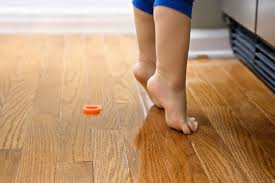
Balance Skills:  stands on tip toes for at least 8 seconds, stands on 1 foot for 10 seconds, able to perform 3 sit ups


FINE MOTOR SKILLS

  • Button and unbutton large buttons
  • Paste things onto paper
  • Use crayons to color and draw while holding the writing instrument with thumb and fingers
  • Uses non-dominant hand to steady writing surface
  • Build a tower of 10 blocks

  • Complete puzzles of 5 or more pieces
  • Zip and unzip a zipper
  • Imitate or copy a cross or circle
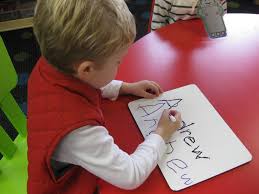
  • Trace letters and begin writing their name


LANGUAGE SKILLS

  • Names colors
  • Names basic shapes
  • Able to count to 10 alone and higher with help
  • Is clearly understood when speaking
  • Understands categories like animals, food, toys, clothes
COGNITIVE SKILLS

  • Can remember a sequence of events with 2-3 steps 
  • Matches shapes and colors 


  • Knows some letter names
  • Sorts objects into groups
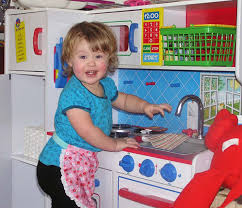
  • Enjoys imaginative play like playing house 


  • Understands concepts like “one” and “many”
  • Makes comparisons
SELF HELP SKILLS

  • wash hands
  • brush teeth                                                                           
 
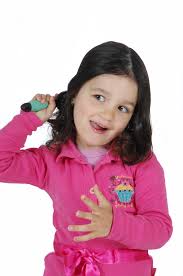
  • Comb hair
  • put on and remove clothes
  • put shoes on the correct feet
  • use a fork and knife

Support for Your Child


Exposing your child to different activities and encouraging curiosity and exploration are wonderful ways to help your child develop these skills. Playing basic board games and puzzles like Candyland, Memory Caps, or Chutes and Ladders teach turn taking, numbers, sequences, and memory.

Some older preschoolers may enjoy participating in a sport such as Little League or soccer.  Many YMCAs or community centers have basic swim classes or gymnastics geared toward little ones. Enrolling in several short-duration classes can expose your child to lots of new movement patterns and experiences and lets them decide what type of sport they might like to pursue later.

Most community libraries have great programs including reading and listening skills, crafts, and special events. These are a fabulous way to let your child participate with peers and gain new skills.

If your child has not accomplished the majority of the above skills by five years old or the start of kindergarten, you may want to consider a screening or evaluation by a Physical Therapist, Occupational Therapist or Speech and Language Pathologist (Speech Therapist). Talk with your pediatrician and access local resources for evaluation clinics or programs.


Blog Administrator:  Trisha Roberts
proeducationaltoys@gmail.com


Copyright © 2017 TNT Inspired Enterprise, LLC, All rights reserved.


Unauthorized duplication is a violation of applicable laws.


Friday, September 1, 2017

Apraxia—What is It? How Can I Get Help for my Child? Part I By Trisha Roberts


Apraxia is a neurological motor disorder that affects a person’s ability to plan and execute a motor movement, even though their muscles are normal.  The posterior parietal cortex of the brain is responsible for assisting a person in motor planning and the completion of a motor task with good control.  If this area of the brain does not develop normally or is damage, it can cause a disruption of the messages from the brain to the muscles, resulting in an inability to perform the task requested. It doesn’t mean that your child has low intelligence or muscle weakness, but a “disconnect”,  if you will, between the synchronization of the brain and muscles.


A mild form of apraxia can also be called dyspraxia. Other names for apraxia include developmental coordination disorder, motor planning difficulty, or motor learning difficulty. Some professionals may use terms like:
  • Ideomotor dyspraxia: Makes it hard to complete single-step motor tasks such as combing hair and waving goodbye.
  • Ideational dyspraxia: Makes it more difficult to perform a sequence of movements, like brushing teeth or making a bed.
  • Oromotor dyspraxia, also called verbal apraxia or apraxia of speech: Makes it difficult to coordinate muscle movements needed to pronounce words. Kids with dyspraxia may have speech that is slurred and difficult to understand because they’re unable to enunciate.
  • Constructional dyspraxia: Makes it harder to understand spatial relationships. Kids with this type of dyspraxia may have difficulty copying geometric drawings or using building blocks. (Understanding Apraxia by Erica Patino)


  Apraxia may be seen at birth or acquired later in life.  In a young child the symptoms of ataxia become apparent as the child develops and grows.  Acquired apraxia is the term given to an apraxia that develops in a person who was previously able to perform the motor task. Some of the more common causes of acquired apraxia are traumatic brain injury, brain tumor, stroke, or a degenerative disease of the nervous system.


A child with a speech apraxia has difficulty saying words or making sounds correctly because they cannot move their tongue or lips to the correct position; their speech may be slurred or difficult to understand.  In another form of motor apraxia affecting the extremities (arms and leg), a child may have difficulty figuring out how to move through an obstacle course, how to hold and manipulate a pencil, how to put on and button a shirt, etc.


Next week we will feature Part II of “Apraxia—What is It? How Can I Get Help for my Child?”


Blog Administrator:  Trisha Roberts
proeducationaltoys@gmail.com


Copyright © 2017 TNT Inspired Enterprise, LLC, All rights reserved.


Unauthorized duplication is a violation of applicable laws.


Friday, August 18, 2017

The Importance of Touch By Trisha Roberts


The sense of touch is important and conveys information to our brain and body that is used in a myriad of different ways.  Skin is the largest organ of the body.  It serves many functions, but a primary one is to sense and convey the sense of touch to our brain. Touch can express care, affection, and love.  Touch can also be noxious or warn us of danger.

Touch is defined by Webster as, “to handle or feel gently usually with the intent to understand or appreciate.”

Children are equipped at birth to feel; they learn to interpret and discriminate touch as they grow and develop. Infants have poor motor control, so they are unable to initiate touching contact—it needs to be the adult care provider that instigates or makes the first move.


 Mother-child attachment is extremely important and is developed through touch, vision, and hearing.  Many pre-mature babies are kept in the NICU for weeks and months, limiting the amount of nurturing contact they experience with their mothers.  


They are subject to harsh lights and noxious stimulation (intravenous feedings, intubation, and other vital medical procedures).  One can easily understand how some of these children develop an eversion to touch.

Studies have shown that when we are deprived of touch, severe and significant problems can result.  Harry Harlow was a famous research psychologist who used monkeys in the 1950’s and 1960’s to study the effects of touch and development. 


 Baby monkeys were raised in isolation and were deprived of their mother’s touch and other social interaction, resulting in atypical development.  Anti-social and even psychotic behavior resulted as well as poor development of interpersonal relationships throughout life.

Touch deprivation can produce developmental delays and deficiencies in children and in extreme cases lead to death.

Elderly who live alone without social or physical contact do not live as long or healthy as their peers who have more social interaction. http://bit.ly/2wYxpkt


Babies need to be cuddled.  Children need to be snuggled.  Teens may enjoy a hug/back rub/wrestling match. Find a way to connect and affirm your child.


Physical touch strengthens emotional bonds; those bonds shapes us for the rest of our lives. 


Look for ways to convey your love, affection, concern, and care to your family members.


Blog Administrator:  Trisha Roberts
proeducationaltoys@gmail.com


Copyright © 2017 TNT Inspired Enterprise, LLC, All rights reserved.


Unauthorized duplication is a violation of applicable laws.


Thursday, June 15, 2017

Talking Tales Books--Tools to Help Speech Development


Last week Speech and Language Pathologist, Erica Graham shared information about making the most of daily opportunities to enhance speech development with children.  Erica is also the author of the children's book series, "Talking Tales".  Here is Erica again, with insights into the birth of her series and excerpts from her books.


When children are learning to speak, they first observe how words sound. This helps them develop an understanding of speech sounds as they learn to talk. Many times when we are working on encouraging speech development or correcting speech sounds, speech-language pathologists will use word lists. However, parents often report difficulty finding time or difficulty getting their children to attend to word lists at home.


 I wanted to combine my knowledge as a speech-language pathologist with my love for writing to create a fun way for children and their caregivers to work on speech development and promote literacy. I also wanted to ensure that these books contained fun story lines that could be enjoyed by children who are not working on their speech. Each book targets a specific speech sound in the English language.

I am currently working on the fifth children’s book in my Talking Tales series. Feel free to sign up for my newsletter on talkingtalesbooks.com or follow me on Facebook, Goodreads, or Amazon for more information as the release date nears.


About the Talking Tales Series
The Talking Tales books are not only fun stories, but they serve a unique purpose. This exciting new series is also designed to help with speech development.

When a child is learning to speak, he or she first learns how words sound by observing. Each book in the Talking Tales series is focused on a different core sound in its naturally occurring word positions, thus increasing a child’s awareness and helping him or her learn how to properly produce the targeted sound. I firmly believe that parents and caregivers are the most important people in a child’s life. For this reason, I have included some speech tips in the front of each book so that these books can be used in a home setting.

The Talking Tales books are tools to help speech development. They do not replace speech therapy. If you do have any questions or concerns about your child’s speech or language development, please consult his or her physician or speech language pathologist. These specialists will be able to help determine if your child’s speech is developing typically or if they may benefit from some intervention.


The Bright Red Tricycle--emphasizing the letter "r" sound


Talking Tales: The Bright Red Tricycle
The bright red tricycle loves spending every day riding around with his boy Ryan. But when Ryan’s dad brings home a new bicycle, the little red tricycle quickly finds himself on an unknown journey. Will the little red tricycle ever be ridden by Ryan again, or is he destined to rust away in a scrap yard? This story is a great tool for any parent or speech therapist. It explores the tale of the bright red tricycle while providing over 80 examples of the “r” sound in various word locations and blends to increase speech development. This book also includes tips for parents who are working with their child’s speech at home.

Work on the letter "t" sounds with your child while reading this book


Talking Tales: Cricket’s Guitar
When Teri hears a small voice calling her, she never would have guessed who she would meet…a cricket! But not just any cricket. This cricket has a guitar. He is hoping that Teri can help him replace a broken string on his guitar. Will Teri’s creative thinking be able to help cricket, or will cricket never play his guitar again? This engaging story is a great tool for any parent or speech therapist. It provides over 80 examples of the “t” sound in various word locations to increase speech development. This book also includes tips for parents who are working with their child’s speech at home.

The "s" sound in a fun book about Sam's Strawberry Sucker


Taking Tales: Sam’s Sticky Sucker
Sam has dreamed all night about his strawberry sucker. When morning arrives, he is unable to resist sneaking downstairs to eat his sucker before breakfast. But when mom comes toward the room and Sam is forced to run back to bed, he loses track of his sticky strawberry sucker. Now where could that sticky strawberry sucker have gone? Will Sam find the sucker before his mom? This funny story is a great tool for any parent or speech therapist. It provides over 170 examples of the “s” sound in various word locations and blends to increase speech development. This book also includes tips for parents who are working with their child’s speech at home.


A fun book that has lots of examples of early sounds


Talking Tales: Puppy’s Bubble
When Puppy wakes up from a nap, he sees a bubble. When it disappears, Puppy begins his long journey to find the missing bubble. Will Puppy find the bubble, or has it vanished forever? This engaging story is a fun way to read to little ones while promoting babbling, early words and language skills. It provides over 90 examples of some of the earliest developing sounds in their most common word positions including “p”, “b”, “m”, “n”, “d” and “h”. This book also includes tips to encourage speech development.


Follow Erica Graham at:

Join Erica Graham’s email list by sending your preferred email address to ericagrahamauthor@gmail.com or by registering on talkingtalesbooks.com


Blog Administrator:  Trisha Roberts


Copyright © 2017 TNT Inspired Enterprise, LLC, All rights reserved.


Unauthorized duplication is a violation of applicable laws.