ProEducationalToys


Toys can be a great way to interact with your child and to teach new skills. Make learning fun! Visit our Retail Site By Clicking Here

Friday, April 28, 2017

Gross Motor Development in 7-12 Year-Olds By Trisha Roberts


When we think of developing gross motor skills, we often concentrate on the first three years of life.  Certainly this is the time of greatest change and advancement, yet children continue to develop new skills and refine existing skills through adolescence. A person’s peak physical performance is usually before 30, between the ages of 18 and 26.


What should a 7 to 12 year old be able to do? By 7 years of age, a child should be able to skip, walk on tip toes, jump, ride a bicycle, skate, and bounce a ball several times in a row (dribble).  In these elementary years, running speed increases as does the accuracy and distance of throwing and kicking skills. Balance, coordination, and motor planning skills continue to advance. 


Biking starts at 7 years of age


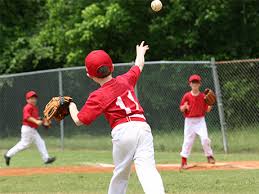
Practicing baseball throwing and catchingBatting SkillsIf your child is struggling to keep up with other children or does not seem to have the same abilities as their peers, it might be advisable to have a thorough evaluation by a Pediatric Physical Therapist.  I also encourage parents to be very actively involved with their children’s teachers, especially the Physical Education Instructor.  Find out what units will be presented during the year and when.  If you know your child will be playing baseball in May, start working on the skills that they will need in April.  Practice throwing and catching, running bases, batting, etc.  We all have a “learning curve”.  Some children take more time to learn something new; if the skill is introduced several weeks in advance, your child will have a bit longer to master the activity and will be more on par with the rest of the class when the unit starts.
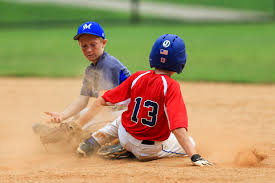


Sliding skills in baseball for children


It is important to encourage physical activity at an early age.  A variety of health organizations and studies suggest at least 60 minutes of moderate exercise several days per week.  Team sports in the community or school can help, but any physical activity with benefit your child’s health.


Playing soccer as a family


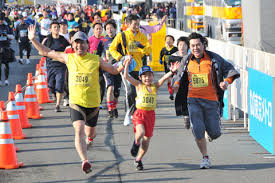
 I encourage families to make exercise a part of their routine.  After school or after dinner is a great time to go for a walk together.  Find a local park or playground and become regular visitors.  Ride bikes around the neighborhood.  Find a family-friendly walk-a-thon or mini-marathon and participate as a family!
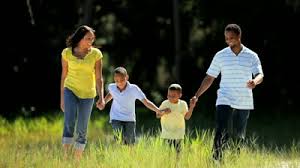


Walking together as a familyActive Family Fun


Family Marathon Run


 Blog Administrator:  Trisha Roberts
proeducationaltoys@gmail.com


Copyright © 2017 TNT Inspired Enterprise, LLC, All rights reserved.


Unauthorized duplication is a violation of applicable laws.


Friday, April 21, 2017

Featured Products: Bocce Ball By Trisha Roberts


Bocce Ball (or Bocci Ball) is a fantastic outdoor game originating in Italy that has been played for generations.  It is a very simple game that can provide fun for the entire family--from young children to teenagers, adults, and elderly.  


In the traditional form of the game, the game is played on natural soil and asphalt courts that measure 90 feet in length and about 13 feet wide, but a relaxed game of Bocce can be played anywhere there is an outdoor open space.  It can be played at the beach, in a park, in the school yard, or in a backyard.  Take it on vacation,  a camping trip, or use it as part of the entertainment for a family reunion, birthday party or graduation party.  It can be played by 2-8 players at a time.


Bocce is a strategy game that resembles lawn bowling.  The game starts by throwing the small “Pallino” ball into the playing field. Each player then tries to throw their larger ball as close to the Pallino ball as possible.  Points are scored by the player whose ball is the closest.


Children 3 years and older can easily participate in this game.  Bocce is easy to learn and can help children improve Gross Motor Skills, strength, Perceptual Motor Skills, motor planning, strategy, and throwing skills.  It is small and portable—keep it in the trunk of your car for spontaneous games wherever you go!

 Blog Administrator:  Trisha Roberts
proeducationaltoys@gmail.com


Copyright © 2017 TNT Inspired Enterprise, LLC, All rights reserved.


Unauthorized duplication is a violation of applicable laws.

Saturday, April 15, 2017

Balance and Motor Planning Part 2—Strategies for Children with Difficulties by Trisha Roberts


Last week we discussed the importance of balance and motor planning. This week let’s look at activities that might help develop better balance and motor planning.

Things to keep in mind with children with motor planning deficits:


  • Cueing and reminders are important for anyone learning a new skill, but even more so with children who are struggling with motor planning.
  • Demonstration is helpful with children with motor planning deficits.
  • Repetition is vital.

Your Physical or Occupational Therapist will have lots of ideas and suggestions—make sure that you are given activities or exercises for home every time your child has a therapy session. 

Some things you can try even if your child is not receiving direct therapy services:


  • Simon Says
  • Go/Stop games: Tell your child to walk/run/jump, then say, “Stop”.  See how few steps it takes before they are able to come to a complete stop.
  • Alternate ways of tying shoes; practice on a Shoe Board.
                        
  • Carrying a jiggly ball or water balloon on a dish towel held by two children (one walks forward, one walks backward)

                     
Water balloon carry

  • Enroll your child in a gymnastics or swim class.  Let the instructor know that learning new skills is challenging for your child.
                                         
Balance Bike is a good way to learn the components of bike riding


Playing in a tunnel can help children with motor planning
  • Play catch while standing on a Balance Dome
Use a balance dome to improve standing balance

  • Set up an obstacle course in the house; practice walking, jumping, hopping, walking backward, etc. through the course
  • Practice a variety of Yoga Poses
                               

  • Scooter board around the house or at the park.  Try it in sitting using heels to move forward or push backward.  Have child use their arms to propel themselves while on their tummy.
Scooter Board can help improve motor planning skills and strengthen core muscles


 Blog Administrator:  Trisha Roberts
proeducationaltoys@gmail.com


Copyright © 2017 TNT Inspired Enterprise, LLC, All rights reserved.


Unauthorized duplication is a violation of applicable laws.


Friday, April 7, 2017

Balance and Motor Planning--Vital Developmental Skills Part I By Trisha Roberts


Balance and Motor Planning are vital skills


What is Balance and how does it affect our lives?  What is Motor Planning? What does it mean when the therapist says that my child has ‘balance issues’ or trouble with ‘motor planning’?


Balance and motion are terms that refer to the practical function of the vestibular sensory system.  The vestibular system controls and regulates a child’s ability to maintain balance and upright posture by sensing a person’s orientation with respect to gravity.  The brain is also given information by the body’s joints with regard to their position—this is called proprioception, or the awareness of our position in space.  The proprioceptive and vestibular systems work hand-in-hand with the execution and control of  coordinated body movements, such as running, jumping, negociating stairs, or throwing a ball as well as fine motor movements like tying a shoe, cutting out a shape, or tracing a letter.

                                                                                                                                                                                                                                                                                                                                                   Stair climbing is a skill requiring coordinated movement of the whole body


Many different systems work together to enable a person to tie their shoes


Children who have problems with balance frequently move with poor control, seem fatigued or weak, and they may appear clumsy and uncoordinated.  Such a child may also display a fear of having their feet off the ground, experience anxiety when attempting a new task, and have difficulty participating in sports and other activities that require coordinated movements.


Tripping and falling can indicate a motor problem


Motor planning refers to praxis, or the ability to conceptualize, plan, and organize movements in order to complete unfamiliar motor tasks in the correct order from beginning to end.  Praxis is a higher-level cognitive function that depends on the integration of multiple sensory systems, including the vestibular and proprioceptive system.  Incoming sensory stimulation needs to be processed correctly in order to form a coordinated motor response.  

Correct processing of incoming signals


Children who are apraxic or dyspraxic will have trouble figuring out how to carry multiple items at the same time, fail to perform tasks in proper sequence, and have difficulty imitating demonstrated actions. They have difficulty learning new activities and often perform activities in an awkward or hesitant way.

Difficulty in the timing of catching a ball


Balance and motor planning are intimately tied; it is difficult to say that a child has just a balance issue or their only deficit is in the area of motor planning. 

There are Occupational Therapists and Physical Therapists who specialize in treating children with these types of problems. They can evaluate your child’s problems and design a treatment plan to address the areas of difficulty and provide strategies to help the child.

Physical Therapy can help your child develop better motor skills


 Next week in Part 2, we will discuss possible treatment strategies and what parents can work on at home.


 Blog Administrator:  Trisha Roberts
proeducationaltoys@gmail.com


Copyright © 2017 TNT Inspired Enterprise, LLC, All rights reserved.


Unauthorized duplication is a violation of applicable laws.


Friday, March 31, 2017

Road Trip with Kids: “Oh, No!” or “I’ve got this!” by Trisha Roberts


This is a previous post, originally written on 3/13/16, but as families are planning vacations for the summer and Spring Break, I thought this would be a good time to revisit how to make travel time more appealing.


Spring Break and Summer Vacation are just around the corner—do I hear a “Hallelujah”?  As exciting as vacations in spring and summer can be, there is always the lurking concern in the back of our minds, “How are we going to get through the long drive with the kids?”

What is the goal of a vacation?  For most people it is to enjoy new places and relax. Make the road trip more than a constant battle over which movie to watch. My husband and I traveled extensively when our children were little, so I know how daunting entertaining little ones in the car can be.  From my experience let me share a few tips to making it to your destination and home again without pulling out all of your hair--take the stress out of your travels and make it fun and educational!

Happy Child Traveling in Car
Travel Can Be Fun for All!
            Preparation is Key

Making a running list of Things to be Done or Packed several weeks before a trip can decrease stress.  Put it on the refrigerator or make a note on your Smart Phone.  Add to the list every thought that pops into your head at odd hours of the night or day, so you can address it at a later time.

Be Realistic in Your Travel Plans
Planning to travel 12 hours straight every day in a car for 3 days to go across country with an 18 month old, 3-year old and 5-year old is not realistic unless you plan on checking yourself into a mental hospital on your return!
Be prepared to stop every 2 hours to stretch and for Potty Breaks.  Vacation is not about, “Conquering the Road,” as much as my husband would disagree!

Take Appropriate Travel Toys
Large toys, toys with 2000+ parts and pieces, toys that are messy or noisy should be left at home! Appropriate travel toys will keep children entertained without driving their parents nuts!
Each child should have a toy bag or small backpack with their own toys.  Spend time with each child in advance, thoughtfully planning what should go with them on the trip.  If they need their special blanket or stuffed animal to ensure a good night’s sleep, make sure you include this!
If we had a trip of over 2 hours, I would buy in advance several new, small, low-cost toys along with a juice box, package of small crackers or cookies, gum etc. for each child. Remember to choose snacks that don't melt! I then wrapped each ‘gift’ and put it in the children’s backpacks the night before the trip.  Every hour the children could open one of their packages (who doesn't look forward to opening a gift?!), giving them something new to play with or enjoy for the next span of time. I called them our Travel Surprise Packages and I can’t tell you how much pleasure my kids received from this simple act. (See our commercial website: http://www.proeducationaltoys.com for pre-wrapped gift boxes for girls or boys and other toy ideas for travel).
Strap or hook baby toys to the car seat whenever possible.  Older children might like a lap tray with a raised rim that allows them to keep their toys and snacks in a perfect position for playing and eating while preventing the items from escaping and rolling under the seats of the car! (Check out our fabulous Travel Tray Here)

Stop at Grassy Rest Areas and Play
      
Play ball at Rest Area grass
Taking a Break Actually Makes the Trip go Faster!

Giving children (and adults!) a chance to stretch and move every couple hours is healthy for bodies and minds alike. The time spent playing will make the remaining time in the car go much easier!
Make a game of running from one tree to the picnic table.  Time each child and try to better their time, best out of 3.
Play a quick game of kick ball, Frisbee, or ball toss.
Play a favorite dance tune on your Smart Phone and let everyone do a Wiggle Dance for 2 minutes.

Tell a Story
Start a story and let each person in the car add to the story.  You could start with a story your children know well and let it take a new "twist".  You can add places and people to the story from your current trip.  Take several hand puppets and let each person use the puppet to tell a story!

Our children have fond memories of our travel times together.  Remember that travel is part of the vacation and should be enjoyed!  We welcome your comments and travel suggestions for young children.  HAPPY TRAVELS!


Author:  Trisha Roberts
www.proeducationaltoys.com

Friday, March 24, 2017

Is Crossing Midline Important for Children? by Trisha Roberts


            Crossing Midline Skills are important


Crossing Midline refers to the ability to move from one side of the body to the other and it is a very important skill to develop! Midline Crossing occurs in the Transverse plane of the body and incorporates bilateral coordination and rotation.  It is needed for almost all our daily movements like getting dressed, throwing a ball, closing a door, crossing a street.


Children's play should involve crossing midline


The brain is divided into 2 hemispheres that control the left and right sides of our body and carry out different functions. Each hemisphere communicates with the other across the corpus callosum, which is a mass of tissue that connects the 2 parts of the brain, allowing smooth, coordinated movements.

Corpus Callosum helps coordinate body movement
Corpus Callosum 


Bilateral coordination is the ability to move both sides of the body together and starts developing in infancy and continues to progress through childhood. The two sides of the body learn to work together (banging toys, pushing, pulling), in an alternating pattern (crawling and walking) and then doing different things with each side of the body (holding a book with one hand and turning pages with the other or holding a paper while coloring or cutting).  Children learn to coordinate between a stronger (dominant) hand and an assisting (non-dominant) hand. When both sides of the brain are sharing information and communicating well, a child can move in a smooth, coordinated way.


Dominant hand


Both hands work together to cut paper and perform other skills


If a person is unable to cross the midline, it might be an indication that there is poor communication between the right and left hemispheres. If a child doesn’t cross midline, they may be delayed in developing a dominant hand.  They may have difficulty rolling from back to tummy, swinging a bat, throwing overhand, kicking a ball, and many more activities.
If a child lacks good core control of the “stabilizing muscles” of the trunk and has difficulty rotating their trunk, they will have difficulty crossing the midline of their body as well. When they can’t rotate their trunk, they can’t cross their midline.  


You might suspect issues with midline crossing if you see your child hold themselves stiffly and turn with their entire body rather than rotate through their center axis to reach something to one side. You may see them pick up an object and pass it to the other hand in order to reach the other side of their body.  You may see a child turn their paper when writing so they do not have to cross midline.


What can be done for a child who does not appear to have good bilateral skills and is not crossing midline well?


An evaluation by a Physical or Occupational Therapist is a good idea if you note problems or are concerned.  Your therapist will give you lots of advice, exercises and ideas to try. You might also enjoy some of the following activities.


Activities to Encourage Midline Crossing:

  • Play games requiring a child to pick up a card, lego, or puzzle piece from one side of their body and place it on the other side. You may need to gently hold down a hand so that the other hand can reach across your child’s body.  (See ProEducationalToys for Great Block Sets!)

Set up play situation to cross midline

  • Have your child hold a large book centered in their lap.  Encourage them to reach across their body with one hand and turn the page.  Alternate hands with each page turn.


Cross midline by turning pages of book
Midline crossing can occur turning pages of a book


  • When children are writing or coloring, encourage the non-dominant or assisting hand to rest on the table and holding the paper. Keep the paper in the middle, centered above a line drawn from the belly button to the chin.

  • Work on a vertical surface like a chalkboard, easel, or white board.  (SEE OUR ARTICLE ON THE BENEFITS OF PLAYINGON A VERTICAL SURFACE!!!)  Make sure that your child is positioned in the middle of the work surface and that they are, indeed, reaching across midline. Place their non-dominant or assisting hand on the surface, as well. Have them draw a large “X” from the top and bottom of each corner of their work space. Make a colorful rainbow from one side to the other.
  • Play catch and throw games with balls and bean bags.  (SEE OUR 3-PART ARTICLE ON HOW BALL SKILLS DEVELOP IN CHILDREN, and choose an activity appropriate for your child).  Place a large cardboard box as a target in front and to one side of the child.  Encourage them to throw using the hand opposite the box so that they will need to cross midline.  Then switch the box to the opposite side and use the other hand.  Make sure that they are standing in one spot and rotating across their body.

  • Play “Flashlight Tag” in a darkened room.  You will need a flashlight for each person.  Sit together with your child, backs against a wall (to help keep them from turning with their whole body!).  Move your flashlight and have your child “chase” the light with theirs.  Practice diagonals and other patterns that encourage crossing midline.
Cross Midline using flashlights

cross midline using flashlight

  • Several children or adults can play the “Caterpillar Game”. Each player bends forward to take hold of the ankles of the child in front of them. As the leader gives the command, “Left, right”, each child moves that leg forward, and consequently carrying the arm of their playmate behind them, enabling the caterpillar to crawl forward.  If children do not yet know left and right, you could have the leader stand in front of the caterpillar and alternate holding up a piece of red paper and blue paper and call, “Red side, Blue side”. Children can sit, squat, or get on all fours to play a variant form of the same game.

Game for improving cross midlineCaterpillar Game to help improve bilateral coordination


Games for crossing midline


  Blog Administrator:  Trisha Roberts
proeducationaltoys@gmail.com


Copyright © 2017 TNT Inspired Enterprise, LLC, All rights reserved.


Unauthorized duplication is a violation of applicable laws.