ProEducationalToys


Toys can be a great way to interact with your child and to teach new skills. Make learning fun! Visit our Retail Site By Clicking Here

Friday, October 27, 2017

Travel Toys By Trisha Roberts


As the holidays approach, many families are making travel plans.  Having good toys and activities can make a trip more enjoyable. (See our blog article, "Road Trip with Kids--"Oh, No" or "I've Got This!") When my children were younger and we were anticipating a long trip, I would start buying small gifts appropriate for playing in a car or plane.  When I had at least 1 for each child for every hour that we would be traveling, I wrapped them in colorful paper and packed them in each child’s backpack. Every hour or so, each child could open a present and play with the new toy or activity; or sometimes it would be a small juice box or package of raisins to snack on.

That was the inspiration for my product line featured this month on my retail website,  ProEducational Toys.  I offer Surprise Travel Packages for girls and boys ages 3-9 that are already wrapped and ready for travel. Many families are busy enough just getting suitcases packed, making travel arrangements, and getting an animal sitter.  These wonderful packages take the work out of traveling with kids!  They come wrapped and ready to throw in the car!


8 Pre-wrapped gifts for boys ages 3-9
EACH SET CONTAINS 8 WRAPPED GIFTS 

Boys Surprise Travel Gifts
PRODUCTS WILL VARY WITH EACH PACKAGE


Travel made easier--girls activities for the car or plane trip
GIRLS VACATION SURPRISE PACKAGE


Travel activities for girls 3-9 years old
FOR GIRLS AGES 3-9 YEARS


At checkout, use the Promotional Code: Holiday Travel and get 10% off these products.


Blog Administrator:  Trisha Roberts
proeducationaltoys@gmail.com


Copyright © 2017 TNT Inspired Enterprise, LLC, All rights reserved.


Unauthorized duplication is a violation of applicable laws.


Friday, October 20, 2017

Balloon Fun for Young Children By Trisha Roberts


What child doesn’t love a balloon?! Besides being a herald of great tidings such as a birthday or other celebration, balloons can be played with in a variety of ways that are also therapeutic.

Helium Balloons                          

Helium Balloons are great, especially the mylar type, as they stay inflated longer and have less risk of popping. When children are learning to stand and walk, a helium balloon can be a tool to build balance. I cut the ribbon on the helium balloon and knot the end so that the ribbon dangles at about the height of the child’s head. This motivates the child to reach up and pull on the ribbon to bring the balloon down.  Core strength, balance, eye-hand coordination, isolation of arms from trunk are all skills that can be improved with this activity.  It is also FUN, so the child is motivated to repeat it many times.


You can also hold a helium balloon at chest level in front of your child and have them reach out and “bop” the balloon out of your hand and watch it rise to the ceiling.

Latex or Plastic Balloons

Regular Latex balloons are great for teaching catching skills to a young child.  A regular playground ball is too hard and difficult to catch for most children just starting to work on ball skills (see our recent 3-part article about Development of Ball Skills in Young Children by clicking here), but a balloon is soft, floats down slowly, and is pliant, making catching easier.


I love to use half or a third of a pool noodle to practice eye-hand coordination and motor planning skills. (If you can’t find a pool noodle, a gift wrap tube or rolled newspaper can serve the same purpose).   Throw the balloon into the middle of the room and have your child try to hit it then chase it around as it skitters away.  You can also use the pool noodle as a bat and play a modified game of T-ball by hitting the balloon off of a stool, chair or other raised surface. Or you can try suspending the balloon from a pool noodle and holding it out for your young one to hit.


 Your child might like batting the balloon around an obstacle course composed of furniture and objects in the room. One or more children can work to keep the balloon in the air by continually hitting it as it starts to float down.


Cautions:  

NEVER, EVER, EVER (Did I mention NEVER!) let a child suck on a balloon or put it in their mouth.  Latex and plastic-type balloons can pop and go down the throat, choking and even asphyxiating a child!

Be cautious of the long strings and ribbons on balloons—children and pets can get them wrapped around their necks or other body parts, potentially causing injury.

Many balloons are still made of latex—be careful not to use them around children and others who have latex allergies!


Blog Administrator:  Trisha Roberts
proeducationaltoys@gmail.com


Copyright © 2017 TNT Inspired Enterprise, LLC, All rights reserved.


Unauthorized duplication is a violation of applicable laws.

Friday, October 13, 2017

Toys that Help Children Develop Creativity By Trisha Roberts


Not all toys are created equal.  As a Physical Therapist, mother and now grandmother, I am always looking for toys that stimulate and foster creativity. I love toys that make kids think…that let kids explore…that encourage an adventure…that involve more than, “push this button and get the standard response”! Children absorb so much from their environment—make it rich in learning opportunities. 

 Make learning fun!


Construction toys like blocks, Legos, Lincoln Logs, and Erector Sets allow children’s imaginations to run wild as well as develop good Fine Motor, Cognitive and Perceptual Motor Skills.
Power Clix Set


Crayons, Play Doh, Markers, Finger Paint, Colored Pencils, Stencils, and other art mediums encourage children to express themselves artistically while exploring colors, shapes and textures.


Doodle Roll


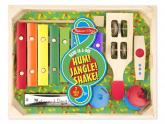
Musical Instruments, whether home-made or bought, permit and inspire children to explore the world of sound, melody, harmony and dissonance.


Microscopes, telescopes, and chemistry sets arouse curiosity and motivate children to discover, unearth, and investigate.  They open up whole new worlds to be explored and researched.


Binoculars


Card games, board games, and word puzzles develop thinking, strategy, and inter-personal skills that help develop an effective approach to tackling and solving problems.


Guess Who?


There are multitudes of companies and stores vying for your dollar.  Think about what to buy your child that will have lasting value in the aptitudes, competencies and abilities that toy may help to cultivate. Amplify your child’s knowledge by providing tools that will expand their thinking and promote an atmosphere of adventure and discovery in your home.  Encourage a questing spirit. Laud and applaud their creations. Encourage a lifetime journey of growth and learning!


Blog Administrator:  Trisha Roberts
proeducationaltoys@gmail.com


Copyright © 2017 TNT Inspired Enterprise, LLC, All rights reserved.


Unauthorized duplication is a violation of applicable laws.

Friday, October 6, 2017

The Low Down on W-Sitting By Trisha Roberts


      W


W-sitting refers to a sitting posture where the buttocks are between the feet and the lower legs are bent at the knees and positioned behind the body to either side, thus forming a W shape.


When a person W-sits the medial (inside) sides of the knees are stressed.  This can lead to overstretching of the ligaments and potentially to an unstable knee and orthopedic problems.


Why do children W-sit?  Why is this bad?

Almost all children will W-sit occasionally, but persistent, prolonged W-sitting is to be discouraged because of the potential harm to the knee and hip joints.

 Children with low muscle tone frequently develop this type of sitting as their preferred method of rest.  It gives them a very large base of support, making them more stable and requiring less energy to maintain; it helps them compensate for their weak musculature. They can play and manipulate toys with their arms, using less energy to keep their trunk and pelvis controlled.   But again, reliance on this position can stress the ligaments and muscles in the hips and knees, and these children already tend to have very lax, flexible joints because of their low muscle tone.

Children with high muscle tone (hypertonia) and sometimes children with spastic Cerebral Palsy (Spastic CP) sit this way.  It should be discouraged because it feeds into their abnormal patterns of movement. W-sitting can aggravate muscle tightness, as it places hip internal rotator muscles, hip adductor muscles and heel cords in a shortened position. W-sitting can lead to more muscle tightness and possibly contractures.

When a child depends on W-sitting it can inhibit or delay them from developing the movement patterns, balance and coordination needed for higher level skills like walking, kicking, running, and skipping. They may also develop poor standing posture and gait abnormalities.


W-sitting can cause hip dislocation, especially if a child has hip dysplasia (a condition of instability, or looseness between the head of the femur and the acetabulum of the pelvis).


Children frequently move backward into a W-sitting position when they are crawling, as it is easier for them to move in and out of sitting and quadruped (all fours), requiring less energy and effort than rotating to one side or turning to sit with legs out front (long sitting).


Very little trunk rotation occurs when a child W-sits.  They are less likely to cross midline and tend instead to manipulate objects on their left side with their left hand and toys on their right side with their right hand.  This can cause delays in developing a hand preference and could lead to future coordination problems.  Additionally, because of the limited amount of trunk rotation allowed in W-sitting, children don’t practice and learn to weight shift diagonally and develop the ability to transition smoothly in and out of positions like sitting and quadruped (all fours) with good rotation.


Other sitting positions to encourage:

Long sitting:   sitting with legs straight out front


Side sitting:  both legs are to one side of the buttocks


Heel sitting:   buttocks rest on the heels (can also be referred to as low kneeling)

Sitting on heels or feet rather than between legs


Crossed Legs:  legs are crossed over each other in front (also referred to as Taylor sitting, Indian style, or “criss-cross applesauce”)


Taylor or Indian Sitting


Cue Your Child:

Children who W-sit find this position very comfortable and stable.  You will need to work with your child to change this pattern.  When you see them W-sitting, give them a positive command like, “Pretty Legs” or “Fix Your Legs”.  (You might want to try something even more meaningful to your individual child, like, “Princess Legs” or “Rocket Ship Legs”) If your child goes to a day care or school, you will want to communicate with the teachers or care providers so that everyone working with your child will be discouraging W-sitting and using the same cues.


Be Consistent!  W-sitting is a habit that needs to be eliminated for the good health of your child. 


Blog Administrator:  Trisha Roberts
proeducationaltoys@gmail.com


Copyright © 2017 TNT Inspired Enterprise, LLC, All rights reserved.


Unauthorized duplication is a violation of applicable laws.


Friday, September 29, 2017

What Should My Preschool-Aged Child be Able to Do? By Trisha Roberts


Infancy and early childhood are a time of great growth and new accomplishments--more than at any other time in a person’s life.  But children continue to develop and acquire new skills as they age.  Let’s discuss some of the activities and skills a preschool child should be mastering.  Preschool refers to the ages of 3 to 5 years old.
A preschooler should already be able to get to standing, walk, and run, but they will be refining these skills by getting faster, smoother, more coordinated and more controlled.  As they age, their attention span should increase and their verbal skills improve.  They will be able to jump forward for longer distances, start at to hop on 1 foot, and enjoy more active play.
At this age children are starting to engage in play with others, imitate movements, and have more goal-directed behaviors.  They are easier to guide in play and can communicate with improving clarity and content. They are learning basic skills that they will need to start kindergarten.
A Basic List of Preschool Skills Include:


GROSS MOTOR SKILLS
3-4 years:  
Locomotor Skills: jump forward 26 inches, runs pumping arms and pushing off balls of feet with a forward lean of the trunk, able to run and make sharp turns, gallops
Climbing Skills:  climbs up and down steps alternating without holding railing or wall

One foot on each step rather than both feet on a step

Balance Skills:  walks forward on a line for 4 feet without stepping off line.  Walks backward 4 feet without stepping off line
Tricycle Skills: pedals and steers a tricycle
Ball Skills:  throw a tennis ball underhand at a target 5 feet away, throws a tennis ball overhand to a target 5 feet away, catches a large ball with hands, elbows bent, able to kick a stationary playground ball


5 years:
Locomotor skills:  hops forward on either foot for 5 hops, skips 10 feet with good rhythm
Climbing skills:  safely climbs on playground equipment with good balance


Ball Skills:  catches a tennis ball with 2 hands from a distance of 5 feet, kick a moving playground ball
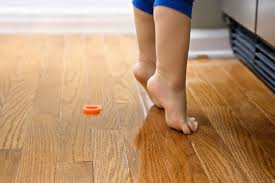
Balance Skills:  stands on tip toes for at least 8 seconds, stands on 1 foot for 10 seconds, able to perform 3 sit ups


FINE MOTOR SKILLS

  • Button and unbutton large buttons
  • Paste things onto paper
  • Use crayons to color and draw while holding the writing instrument with thumb and fingers
  • Uses non-dominant hand to steady writing surface
  • Build a tower of 10 blocks

  • Complete puzzles of 5 or more pieces
  • Zip and unzip a zipper
  • Imitate or copy a cross or circle
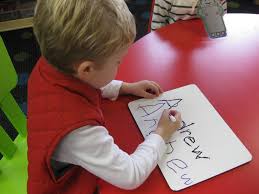
  • Trace letters and begin writing their name


LANGUAGE SKILLS

  • Names colors
  • Names basic shapes
  • Able to count to 10 alone and higher with help
  • Is clearly understood when speaking
  • Understands categories like animals, food, toys, clothes
COGNITIVE SKILLS

  • Can remember a sequence of events with 2-3 steps 
  • Matches shapes and colors 


  • Knows some letter names
  • Sorts objects into groups
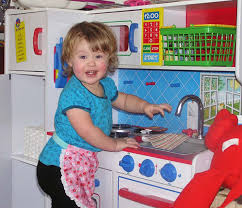
  • Enjoys imaginative play like playing house 


  • Understands concepts like “one” and “many”
  • Makes comparisons
SELF HELP SKILLS

  • wash hands
  • brush teeth                                                                           
 
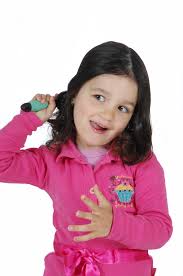
  • Comb hair
  • put on and remove clothes
  • put shoes on the correct feet
  • use a fork and knife

Support for Your Child


Exposing your child to different activities and encouraging curiosity and exploration are wonderful ways to help your child develop these skills. Playing basic board games and puzzles like Candyland, Memory Caps, or Chutes and Ladders teach turn taking, numbers, sequences, and memory.

Some older preschoolers may enjoy participating in a sport such as Little League or soccer.  Many YMCAs or community centers have basic swim classes or gymnastics geared toward little ones. Enrolling in several short-duration classes can expose your child to lots of new movement patterns and experiences and lets them decide what type of sport they might like to pursue later.

Most community libraries have great programs including reading and listening skills, crafts, and special events. These are a fabulous way to let your child participate with peers and gain new skills.

If your child has not accomplished the majority of the above skills by five years old or the start of kindergarten, you may want to consider a screening or evaluation by a Physical Therapist, Occupational Therapist or Speech and Language Pathologist (Speech Therapist). Talk with your pediatrician and access local resources for evaluation clinics or programs.


Blog Administrator:  Trisha Roberts
proeducationaltoys@gmail.com


Copyright © 2017 TNT Inspired Enterprise, LLC, All rights reserved.


Unauthorized duplication is a violation of applicable laws.